
Call Now
Masai Mara: Situated in southwestern Kenya, the Masai Mara National Reserve encompasses 1,510 km2 (583 mi2) of expansive plains, acacia woodlands, and the meandering Mara River. It harbors an exceptional assembly of wildlife—exceeding two million wildebeest and zebra during the Great Migration, alongside a perennial congregation of predators and prey. Elephants, lions, cheetahs, and giraffes are frequently observed. Leopards are more difficult to spot, yet they reside within the locale. Within the river, hippopotami congregate in the shallows, while crocodiles patiently await. Boasting over 500 avian species and countless instances of serenity paired with unanticipated encounters, the Masai Mara transcends mere destination status and embodies a vibrant, dynamic ecosystem. Of course, the preceding description is only representative of a Masai Mara safari. Every lodge and camp provide a distinct itinerary of safari activities. Aside from standard game drives, visitors might enjoy guided nature walks, hot air balloon rides, bush picnics, visits to local Masai villages (manyattas), or other optional pursuits. Note that some activities, like hot air balloon safaris, might incur extra costs beyond the base safari price. Regardless, a Masai Mara safari offers ample opportunities for engagement and enjoyment, ensuring a fulfilling and exciting experience. Upon arriving in Kenya, there are two primary means of reaching the Masai Mara. For travelers seeking speed and convenience, or those with limited time, air travel is the optimal choice. Daily flights to various airstrips within and surrounding the Masai Mara offer a swift and comfortable journey. The specific airstrip you select will depend on your chosen accommodation. The flight from Nairobi to the Masai Mara typically lasts between 40 and 45 minutes. Conversely, driving from Nairobi to the Masai Mara can enhance the sense of freedom and adventure. Opting for the open road is ideal for sightseeing along the route or saving on transportation costs. However, the roads are notoriously rough and unreliable, making the drive approximately six to seven hours long. Although, if adventure is what you seek, driving to the Masai Mara from Nairobi will certainly appeal to you. Despite all this, most people opt to fly. Best Time to visit: The Great Migration is undeniably one of the Masai Mara's most sought-after spectacles. From July to October, the Mara plays host to the awe-inspiring annual migration of 1.5 million wildebeest from the Serengeti. Throughout this period, the savanna teems with wildebeest, zebras, and a host of other herbivores. This season is also renowned for the dramatic river crossings at the Mara and Talek Rivers. The drier conditions result in sparser vegetation, significantly enhancing wildlife visibility. While the Masai Mara offers exceptional wildlife viewing opportunities throughout the year, many travelers time their visits to coincide with the Great Migration. Consequently, the Masai Mara National Reserve, particularly its popular regions, can become quite congested during this period. How to Reach: By Air: Jomo Kenyatta International Airport (NBO) in Nairobi is the recommended port of entry for travel to the Masai Mara. As East Africa's largest hub, NBO offers numerous convenient flight options. The prevalent method of reaching the Masai Mara by road involves reserving a guided drive-in safari. These safaris, commencing in Nairobi, afford the opportunity to incorporate various other Kenyan destinations alongside the Masai Mara.
Upon arrival at JKI Airport in Nairobi, our representatives shall extend a cordial reception. They will facilitate your transfer to your Nairobi hotel for your overnight stay.
Following a substantial breakfast at the hotel, commence an expedition to the distinguished Masai Mara Game Reserve, a prominent Nairobi attraction. The journey will traverse the scenic Great Rift Valley, affording numerous photographic opportunities.
En route to the Masai Mara, a luncheon respite shall be observed. Upon arrival at the reserve, prepare for an exceptional encounter, availing yourselves of the opportunity to behold the animal kingdom's most sublime spectacles; from the lion's authoritative roar to the cheetah's astounding hunting prowess. Maintain photographic readiness to capture instances such as an elephantine expression of displeasure.
Prepare to be enthralled by a plethora of captivating events as you explore the Masai Mara Game Reserve.
Embark upon a safari expedition in anticipation of observing wildlife. Optimal viewing times are during the early morning and evening, when such creatures are most visible in their natural habitat. Midday excursions offer opportunities to observe the renowned "big five": the leopard, lion, rhinoceros, and elephant.
Start your day with a substantial breakfast, and ensure adherence to the directives provided by your safari guide to facilitate navigation within Lake Nakuru National Park. Upon completion of preparations, proceed to Lake Nakuru Lodge where a leisurely luncheon may be enjoyed.
The true adventure commences in the afternoon with an exhilarating game viewing excursion within the confines of Lake Nakuru National Park.
Start your day with a delectable breakfast. Later check out from the hotel and drive to Nairobi. Our representatives shall escort you to drop at Jomo Kenyatta International Airport for your departure.
Tour Ends.
Accommodation is offered on a dual occupancy basis.
Daily continental breakfast,
Check-in: 14:00 hours. Check-out: 09:00 hours.
Private transfers during the tour by air-conditioned vehicle (The air conditioning system shall be inoperative when the vehicle is parked).
state taxation, toll fees, parking charges, driver's remuneration.
Note: Accommodations are contingent upon availability, and rates may vary during festive periods or peak seasons (such as New Year's, Holi, Diwali, Christmas, and extended weekends, among others).
Early check-in and late checkout are contingent upon availability
Travel Insurance
Park Entry Fees
Tourism development levy
Expenses Incurred by Any Individual
Hot air balloon safari (additional charge)
All items of personal nature
Any items not explicitly included in the inclusions are chargeable.
GST
Additional meals, personal expenses, and any locations not specified in the itinerary will incur extra costs.


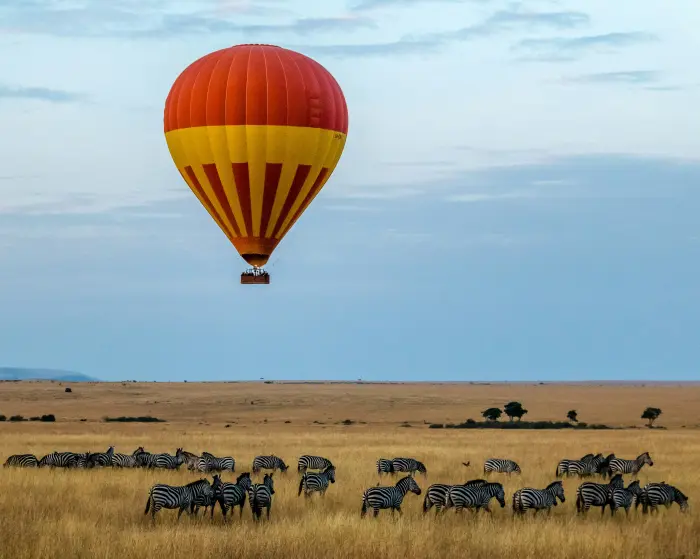
The Masai Mara's entry gates (Sekenani, Talek, Oloolaimutiek, Musiara, Oloololo) are open from 6:00 AM to 6:00 PM. We advise arriving at any gate no later than 3:00 PM to ensure timely arrival at your Masai Mara camp or lodge. Please be aware that the Sand River gate is currently closed.
You have likely encountered images or footage from the Masai Mara in wildlife documentaries, National Geographic, or BBC nature series. The Masai Mara's iconic status as a premier African safari destination is well-deserved. Its stunning landscapes, characterized by rolling hills and golden grasslands, are instantly recognizable. It boasts an unparalleled concentration of big cats, including some truly renowned individuals. Moreover, the Masai Mara hosts the Great Wildebeest Migration, a spectacular event occurring annually between July and October. During this period, approximately 1.5 million wildebeest, 300,000 gazelles, and 200,000 zebras migrate from the Serengeti in Tanzania to the Masai Mara, crossing the Mara River in search of fresh grazing lands. These vast herds sustain a remarkable population of predators, including lions, cheetahs, and leopards. This dramatic struggle for survival, in its raw and beautiful form, has made the Mara a favorite filming location. This explains why some of its feline residents may seem familiar, having starred in BBC productions such as 'Big Cat Diary,' 'Dynasties,' and numerous segments of the 'Earth' series.
The name Masai Mara originates from the Maa language. In Maa, "mara" signifies "spotted" or "mottled," describing the landscape's patchy appearance with scattered trees. Maa is the language of the local Maasai people.
While wildlife roams freely here, specific animal sightings cannot be guaranteed (though we wish they could be!). Consequently, we cannot predict with absolute certainty whether you will encounter lions, cheetahs, leopards, or other species you are eager to see. However, you are surely aware of the Mara's reputation; this area is world-renowned for its abundant plains teeming with big cats, the Great Migration, and countless other remarkable species. The Masai Mara is home to all of the "Big Five," and your chances of seeing most of them are high (rhinos are very rare). Indeed, the Mara-Serengeti ecosystem hosts more wildlife species and individual animals than any other wilderness reserve in Africa.
Indeed, we consistently advise packing binoculars; they significantly enhance the bush experience, bringing distant wildlife—particularly birds—into sharp focus. Certain Masai Mara safari camps and lodges provide binoculars for guests' use (noted on our accommodation pages). While some lodges equip driver/guides with an extra pair, this availability isn't assured.
Indeed, the Masai Mara merits a visit. This globally celebrated wildlife reserve in southwestern Kenya teems with diverse fauna, notably the "Big Five": elephants, lions, leopards, buffalo, and rhinoceroses. The Mara is also famed for the annual wildebeest migration, a spectacle involving millions traversing the reserve in quest of verdant pastures. A Masai Mara excursion provides an unparalleled opportunity for intimate encounters with the planet's most remarkable wildlife. The region's breathtaking landscapes and unspoiled beauty are a highlight, and the chance to engage with the indigenous Maasai and discover their traditions further enriches the experience. Though, in all candor, your inquiry might have reached an already convinced audience.
Arrange your trip in advance - book this tour now!